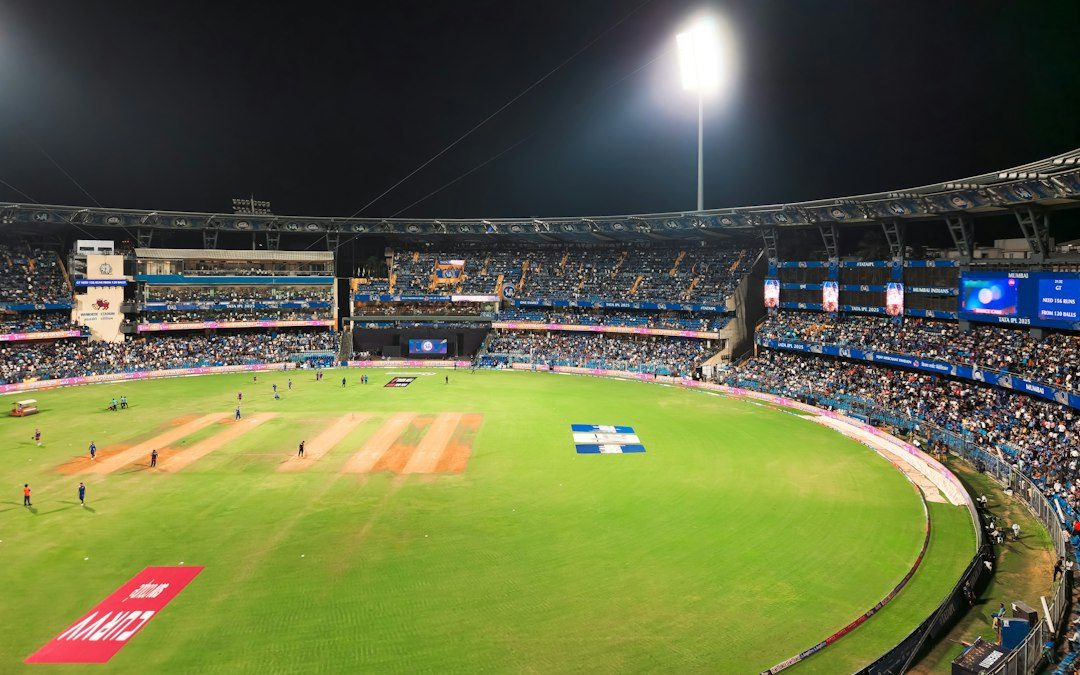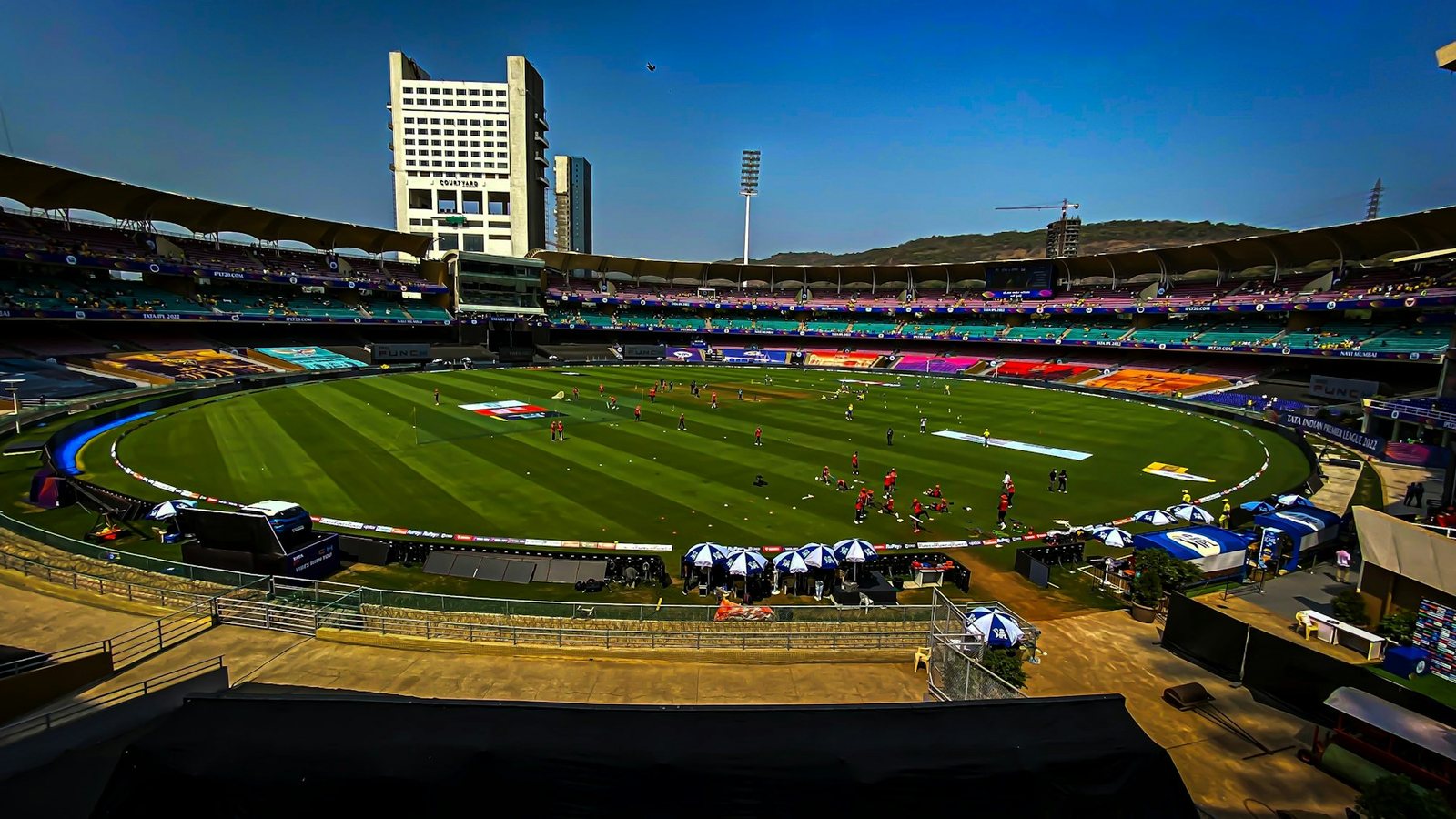
Searching for an IPL pitch report today often returns a short verdict such as “good for batting” or “help for spinners.” Those phrases can be useful shorthand, but they leave out the information needed to assess a specific fixture: which ground and strip are being discussed, when the observation was made, and whether the comparison uses recent IPL innings or a different format. A pitch note is an input to matchday research, not a forecast by itself.
Start with the exact venue and date
First confirm the fixture’s ground on the official IPL match page. Teams can move venues, and a city name is not enough when a ground has multiple strips or when a season uses a different venue configuration. Then check the date of the pitch report. A report written for an earlier match may describe a used surface, a different square, or weather that no longer applies. Save the source and timestamp instead of copying a one-line summary.
The IPL’s official fixtures and results page lets you verify the season, venue and match record. Use its scorecards as a starting point for recent innings totals, not as proof that the next match will follow the same pattern. The current playing conditions explain how interruptions and revised overs can alter a match. That is why a venue note should be kept separate from a rain or restart scenario.
Translate descriptive words into observable questions
When a report calls a surface “slow,” ask what was actually observed. Did the ball grip after pitching, lose pace, or make timing difficult? Were those observations made in the first few overs or later, after wear? If it says “carry,” ask whether the comment refers to bounce from a specific length, and whether the sample came from a comparable match. Vague labels are easier to overread than concrete evidence.
Write down three observations at most: pace off the surface, bounce consistency, and visible wear or roughness. Add a confidence note for each one. If the report gives only a broad conclusion without an observation or source, mark it as low confidence. Avoid turning “may assist spin” into “spinners will dominate”; the first is a conditional description, while the second is a result claim. If two reports disagree, preserve both observations and note their timestamps instead of choosing the one that confirms your first impression.
Build a venue sample that can be checked
Recent scores can add context, but choose the sample carefully. Separate IPL T20 games from domestic one-day cricket, Tests and international matches. A venue’s last five IPL matches may be more relevant than a larger set from different formats, yet five games are still a small sample. Note whether those matches used the same ground, how many innings were completed, and whether rain shortened any of them.
Do not average totals blindly. A 220-run first innings and a 130-run rain-reduced innings do not describe the same scoring conditions. Record the first-innings score, overs available, interruptions and whether the chase had a revised target. If one result is extreme, inspect its scorecard and context before letting it define the venue. The purpose is to describe the range of outcomes and uncertainty, not to manufacture a “par score” that the evidence cannot support. A small table in your own notes can separate completed 20-over games from shortened ones without forcing them into one average.
Keep toss, dew and pitch in separate boxes
The toss can change a captain’s choice, and evening moisture may affect grip or the ball’s condition. Neither factor is the pitch itself. Track the scheduled start, likely innings timing and weather forecast separately, then update only when reliable matchday information arrives. A pre-match pitch report cannot confirm the amount of dew later in the evening, and a team choosing to field does not prove that the surface is easy to chase on.
Lineups are another separate input. A change in bowling options may alter how a team uses a surface, but it does not validate a pitch claim. Check the confirmed XI after the toss and record what changed. If the team’s plan depends on an unconfirmed player or a speculative surface description, reduce confidence rather than filling the gap with certainty. For a day game, do not copy an evening-match dew note; for a night game, distinguish a forecast from moisture actually observed on the ground.
Use a compact decision sheet
- Fixture, ground, strip if reported, and pitch-note timestamp.
- Exact observations, with the source and confidence for each.
- Recent IPL scorecards, separated by innings and overs completed.
- Rain, restart or revised-over risk checked against the match conditions.
- Toss decision, confirmed XI and any late change recorded only after release.
After the match, compare your notes with what happened. Did the surface behave differently after the first innings? Did weather or a lineup change matter more than the pitch description? Keep that review factual. One game should not turn a weak observation into a permanent venue rule. Over time, a log can show where your information was reliable and where you repeatedly confused a headline with evidence. Review both misses and correct calls so the method does not reward selective memory.
For confirmed team information, use our IPL playing XI checklist alongside the matchday research hub. If the available pitch information is stale, unverified or too thin to separate one scenario from another, “no view yet” is a sound research outcome. If you choose to bet, set a limit first; no surface report removes the risk of losing the stake.